
Call us now:

Stainless Steel Standards Guide
ASTM A276 vs ASTM A479 Stainless Steel Bar: Key Specification Differences
ASTM A276 and ASTM A479 can both appear on stainless steel bar purchase orders, but they serve different project scopes. Understanding the difference helps buyers specify the right material documentation.
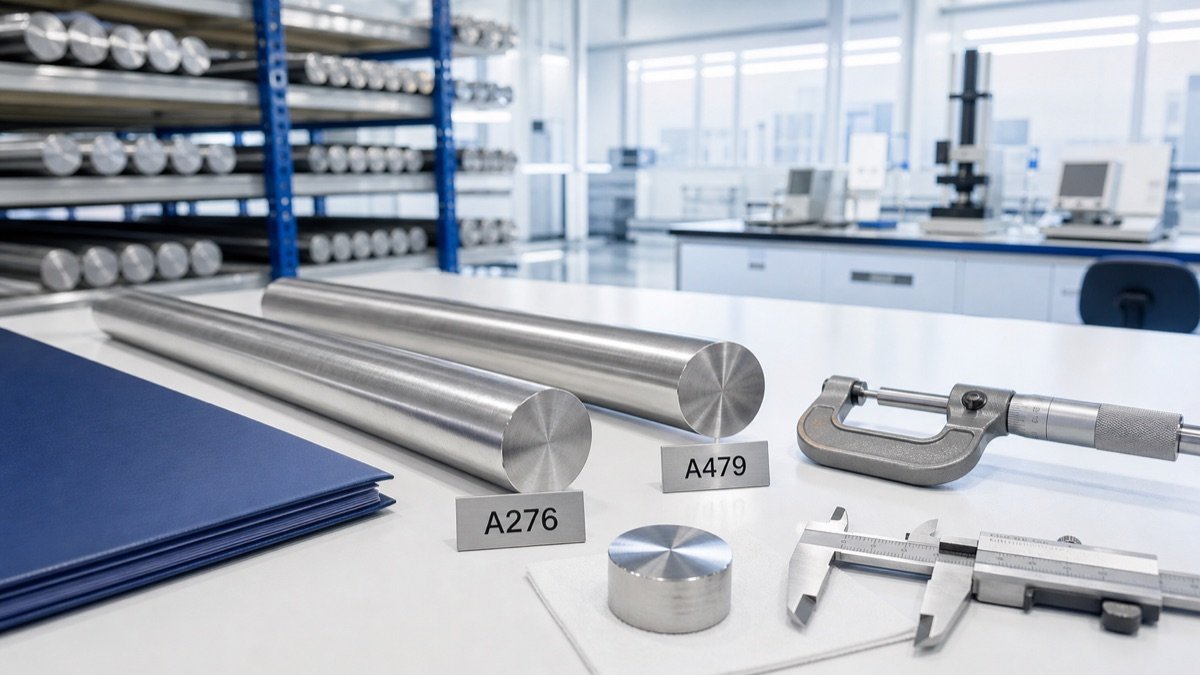
Quick answer: ASTM A276 is the general specification for stainless steel bars and shapes. ASTM A479 is specifically for stainless steel bars and shapes used in boilers and other pressure vessels. A479 is not automatically a “better” grade; it is the more relevant specification when the project scope involves pressure equipment and its associated requirements.
What Is ASTM A276?
ASTM A276/A276M is the standard specification for stainless steel bars and shapes. It is commonly used for round bars, square bars, hex bars, flat bars, and other stainless steel shapes supplied for general industrial and machining applications.
Typical A276 projects include shafts, fasteners, fittings, machined components, structural parts, and corrosion-resistant equipment. The exact grade, delivery condition, dimensions, finish, and testing requirements still need to be stated on the purchase order.
See the current ASTM A276/A276M standard listing for the official scope and edition information.
What Is ASTM A479?
ASTM A479/A479M is the specification for stainless steel bars and shapes used in boilers and other pressure vessels. It covers hot- and cold-finished bars, including rounds, squares, and hexagons, as well as selected hot-rolled or extruded shapes.
A479 is therefore more closely connected to pressure-containing equipment, high-temperature service, valves, pumps, boiler components, and pressure-vessel construction than a general-purpose A276 order.
Review the official ASTM A479/A479M standard listing and confirm the edition named in the project documents.
ASTM A276 vs ASTM A479 Comparison
| Selection factor | ASTM A276/A276M | ASTM A479/A479M |
|---|---|---|
| Primary scope | Stainless steel bars and shapes for general product and industrial use | Stainless steel bars and shapes for boilers and other pressure vessels |
| Common product forms | Rounds, squares, hexagons, flats, and other shapes | Hot- or cold-finished bars and selected hot-rolled or extruded shapes |
| Typical equipment | Machined parts, shafts, fasteners, fittings, and general equipment | Pressure vessels, boilers, valves, pumps, and pressure-related components |
| Grade selection | Grade and condition must be specified by the buyer | Grade, condition, testing, and pressure-equipment requirements must be specified |
| Best purchasing question | Does the bar meet the general stainless steel bar specification? | Does the bar meet the pressure-vessel specification and project code requirements? |
Why the Standard on the Purchase Order Matters
Same grade, different scope
A stainless steel grade such as 304, 316L, 321, or 2205 may appear under more than one product specification. The grade name alone does not define the complete order requirement.
Documentation follows the project
The required tests, heat treatment, dimensions, surface finish, traceability, and certification should match the equipment design and applicable code, not just the material family.
Using A276 for a pressure-vessel project, or using A479 without the required pressure-equipment details, can create documentation gaps during inspection. Always follow the project engineer’s approved material specification.
What Buyers Should Specify
- ASTM specification and current edition required by the project.
- Stainless steel grade and UNS designation.
- Bar shape, diameter or across-flats dimension, length, and tolerance.
- Hot-finished, cold-finished, peeled, ground, or polished surface condition.
- Heat treatment and delivery condition.
- Chemical analysis, mechanical properties, hardness, and any supplementary testing.
- Heat number, material test report, and EN 10204 3.1 documentation when required.
- Pressure-vessel code, valve standard, NACE requirement, or other project-specific references.
For engineering buyers, the safest approach is to send the drawing, material requisition, equipment service, and certificate requirements together with the inquiry.
ASTM A276 or A479: Which One Should You Use?
Choose ASTM A276 when you need general stainless steel bars or shapes for machining, structural, or industrial components. Choose ASTM A479 when the bar or shape is intended for boiler, pressure-vessel, or pressure-equipment construction and the project calls for that specification.
Neither standard replaces the full project specification. Grade, dimensions, heat treatment, tests, code requirements, and certificate format should be confirmed before production.
Need a Stainless Steel Bar Specification Review?
Send the requested ASTM standard, grade, size, quantity, finish, and certificate requirements to Saky Metal. We can help review the order details and prepare an export quotation for your project.
Technical note: ASTM standards are protected technical documents. Confirm the latest applicable edition and project-specific requirements with the responsible engineer, purchaser, or authorized standards provider.