
Call us now:


Nickel Alloy Bar Guide
Inconel 600 Bars: Properties, Standards, Applications and Selection Guide
A practical engineering and procurement guide to UNS N06600 composition, ASTM B166 requirements, performance, fabrication and industrial applications.
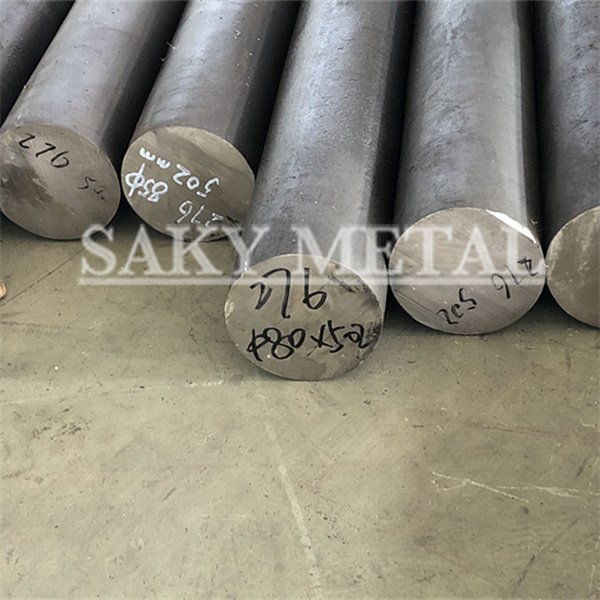
Quick answer: Inconel 600 (UNS N06600 / 2.4816) is a nickel-chromium-iron alloy selected for its combination of oxidation resistance, corrosion resistance and useful mechanical properties across a broad temperature range. Bar orders should define ASTM B166 or ASME SB-166, dimensions, supply condition, testing and traceability.
What Is Inconel 600 Bar?
Inconel 600 is a solid-solution-strengthened nickel-chromium-iron alloy identified as UNS N06600 and Werkstoff Nr. 2.4816. Its high nickel content contributes resistance to many reducing environments and to chloride-ion stress-corrosion cracking, while chromium provides oxidation resistance. Iron is a major supporting element in the alloy system.
Unlike precipitation-hardenable nickel alloys, Alloy 600 is not strengthened by an age-hardening treatment. Its mechanical properties are controlled mainly through solution treatment, hot or cold working and the final product condition. This distinction matters when a drawing requires a specific strength range, hardness or machining response.
Bar products may be supplied as round, square, hexagonal or other ordered sections, subject to the governing specification and mill capability. SAKYMETAL supplies Inconel 600 round bar for machined parts, high-temperature hardware and corrosion-resistant components.
Key Designations and Product Standards
| Item | Typical designation or requirement |
|---|---|
| Common name | Inconel 600 / Alloy 600 |
| UNS number | N06600 |
| European material number | 2.4816 |
| Primary bar specification | ASTM B166 / ASME SB-166 |
| Material family | Nickel-chromium-iron alloy |
| Strengthening mechanism | Solid-solution strengthening and cold work |
| Common documentation | Mill test certificate; EN 10204 3.1 when ordered |
ASTM B166/B166M is a primary specification used for nickel-chromium-iron alloy rod, bar and wire, including UNS N06600. Pressure-equipment projects may reference the corresponding ASME SB-166 material specification. Buyers should state the required edition of the standard and avoid assuming that a generic alloy certificate automatically meets a project-specific code.
Dimensional tolerances, straightness, length, edge condition and permissible surface imperfections should be confirmed against the purchase specification. If a bar will be machined to a critical finished diameter, the ordered size must include sufficient machining allowance.
Inconel 600 Chemical Composition
The following table summarizes commonly specified composition limits for UNS N06600. The controlling purchase specification and certified mill test report remain authoritative for each order.
| Element | Typical specification limit, wt.% | Function in the alloy |
|---|---|---|
| Nickel | 72.0 min. | Resistance to many reducing media and chloride-ion stress-corrosion cracking |
| Chromium | 14.0–17.0 | Oxidation resistance and protection in many corrosive environments |
| Iron | 6.0–10.0 | Major constituent supporting the alloy balance |
| Carbon | 0.15 max. | Controlled to balance processing and performance |
| Manganese | 1.00 max. | Residual and processing-related control |
| Silicon | 0.50 max. | Controlled for melting, processing and service performance |
| Copper | 0.50 max. | Restricted residual element |
| Sulfur | 0.015 max. | Restricted to support hot workability and product quality |
Material identification should be based on certified chemistry rather than appearance. For safety-critical or mixed-alloy projects, positive material identification (PMI) can provide an additional verification step before machining or installation.
Why Engineers Select Inconel 600 Bars
High-temperature oxidation resistance
The chromium-bearing alloy develops a protective oxide scale in many elevated-temperature environments. This makes Alloy 600 useful for furnace hardware, heat-treatment fixtures and components exposed to repeated heating. Actual allowable temperature depends on atmosphere, loading, thermal cycling and component design; a single maximum-temperature value should not be used without engineering review.
Corrosion resistance across varied media
The nickel-rich matrix provides useful resistance in many organic and inorganic environments, while the nickel-chromium combination performs well in numerous oxidizing and reducing conditions. Compatibility must still be checked against concentration, temperature, aeration, contaminants and stress. Molten sulfur-bearing compounds and some strongly caustic conditions, for example, require special attention.
Resistance to chloride-ion stress-corrosion cracking
Alloy 600 is widely recognized for resistance to chloride-ion stress-corrosion cracking compared with many austenitic stainless steels. This is valuable in chemical processing, water-related equipment and high-temperature service, but it does not eliminate the need to evaluate the complete environment and residual or applied stress.
Useful strength from cryogenic to elevated temperatures
The alloy retains practical mechanical properties over a broad temperature range. Because it is solid-solution strengthened, its strength level depends strongly on product form and condition. Procurement documents should therefore specify annealed, hot-worked or cold-worked condition rather than relying on the alloy name alone.
Mechanical Properties and Supply Condition
Mechanical values for Inconel 600 bar vary with diameter, processing route and final condition. Annealed material generally offers greater ductility and more uniform fabrication behavior, while cold-worked material can provide higher strength and hardness. Exact tensile, yield, elongation and hardness requirements should come from the applicable standard, drawing or approved material datasheet.
- Annealed bar: commonly selected for forming, welding, stable ductility and general machining.
- Hot-worked bar: suitable for larger sections and subsequent machining where ordered properties are met.
- Cold-worked bar: selected when increased strength or tighter dimensional control is required.
- Ground or peeled bar: useful where surface quality, concentricity or reduced machining stock is important.
For critical shafts, valve components or rotating parts, buyers may also specify straightness, ultrasonic testing, grain-size control or additional surface inspection.
Machining, Forming and Welding Considerations
Inconel 600 can be fabricated using established nickel-alloy practices, but it work-hardens more rapidly than conventional carbon steel. Successful machining normally requires rigid equipment, sharp tools, controlled feeds and a cutting strategy that avoids rubbing or repeated light passes on a hardened surface.
- Use a rigid setup and minimize vibration and tool overhang.
- Maintain positive cutting action beneath the work-hardened layer.
- Apply suitable coolant and manage heat at the cutting edge.
- Allow machining stock appropriate to the supplied bar condition.
- Qualify welding procedures, filler metal and heat input for the joint design and service.
The alloy can be hot- and cold-formed, although forming loads may be higher than those for common stainless steels. Any thermal treatment after forming or welding should follow the approved procedure; unplanned heat treatment can change grain structure, mechanical behavior and corrosion performance.
Common Applications for Inconel 600 Bar
Bar stock is frequently machined into components where corrosion resistance, oxidation resistance and dimensional integrity are required together. Typical uses include:
- Furnace rollers, retorts, supports, trays and heat-treatment fixtures
- Valve stems, shafts, fasteners and process-equipment hardware
- Chemical-processing components exposed to mixed corrosive conditions
- Electrical and electronic components requiring nickel-alloy stability
- Nuclear and high-purity water service components subject to project approval
- Aerospace and thermal-processing hardware
- Fixtures and tooling used in carburizing or nitriding operations, where the complete atmosphere has been reviewed
The final application should determine the ordered condition and inspection plan. A bar suitable for a lightly loaded furnace fixture may not meet the documentation, cleanliness or nondestructive-testing requirements of a pressure-boundary or nuclear component.
Inconel 600 vs 625 vs 718 Bar
| Alloy | Primary selection advantage | Typical selection context |
|---|---|---|
| Inconel 600 | Balanced oxidation and corrosion resistance with good fabricability | Furnace, chemical-processing and general high-temperature hardware |
| Inconel 625 | Higher strength plus strong resistance to pitting and crevice corrosion from its Mo-Nb alloying | Marine, offshore, chemical and severe corrosion service |
| Inconel 718 | High precipitation-hardened strength and fatigue resistance | Aerospace, turbines, high-strength fasteners and demanding mechanical components |
These grades are not interchangeable. Alloy 625 may be preferred where localized corrosion is the dominant concern, while Alloy 718 is selected when much higher mechanical strength is required. Alloy 600 remains attractive when a straightforward solid-solution alloy offers the required corrosion and thermal performance. Substitution should always be approved against the design code, environment and fabrication route.
How to Specify Inconel 600 Bar on an RFQ
A complete request for quotation reduces technical clarification time and prevents mismatched material from reaching the machine shop. Include the following information:
- Material: Inconel 600 / Alloy 600, UNS N06600, 2.4816.
- Standard: ASTM B166/B166M or ASME SB-166, including required edition.
- Shape and dimensions: round, square or hex bar; diameter or across-flats size; tolerance and machining allowance.
- Condition: annealed, hot-worked, cold-worked, peeled, ground or another agreed finish.
- Length: fixed, random or cut lengths, including length tolerance.
- Surface: black, pickled, peeled, ground or polished, with acceptance criteria where necessary.
- Testing: chemistry, tensile and hardness requirements plus PMI, ultrasonic or other supplementary examinations.
- Documentation: mill test certificate, heat-number traceability and EN 10204 3.1 certification if required.
- Marking and packing: piece marking, tags, export packing and corrosion or handling protection.
- End use: design temperature, environment and applicable construction code, especially for critical service.
Purchasers should also clarify whether quotations may include an equivalent brand name and whether country-of-origin or approved-mill restrictions apply.
Quality Checks Before Machining or Installation
- Compare heat numbers on the bars with the material certificate.
- Verify dimensions, length, straightness and ordered surface condition.
- Review certified chemistry and mechanical properties against the purchase order.
- Check for transport damage, deep laps, seams or unacceptable surface defects.
- Complete PMI and supplementary examinations when specified.
- Maintain material segregation throughout cutting and machining.
Traceability is especially important when several nickel alloys are stored together because visual identification is unreliable. Records should connect cut pieces and finished components back to the original heat and certificate.
Frequently Asked Questions
What specification covers Inconel 600 bar?
ASTM B166/B166M is a primary specification for nickel-chromium-iron alloy rod, bar and wire, including UNS N06600. ASME construction may reference the corresponding SB-166 specification. The purchase order should state the required edition and any supplementary requirements.
Is Inconel 600 the same as UNS N06600?
UNS N06600 is the unified designation for the alloy commonly called Inconel 600 or Alloy 600. The European material number is 2.4816. Compliance must be confirmed through the applicable specification and material certificate.
Can Inconel 600 bar be hardened by heat treatment?
No conventional precipitation-hardening cycle is used for Alloy 600. Strength is mainly adjusted through cold work and product condition. Heat treatment is used to control microstructure and ductility rather than to create the precipitation-hardening response associated with Alloy 718.
What is the difference between Inconel 600 round bar and rod?
The terms are sometimes used interchangeably in trade, but specifications may define dimensional ranges, tolerances or product forms differently. Buyers should specify the exact diameter, tolerance, condition and governing standard instead of relying only on the product name.
What certificates should be requested?
A mill test certificate showing heat-specific chemistry and mechanical properties is the normal starting point. EN 10204 3.1 certification, PMI, ultrasonic testing or additional inspection reports can be ordered when required by the project.
How should buyers choose between Inconel 600, 625 and 718?
Choose according to the dominant requirement: Alloy 600 for balanced thermal and corrosion performance, Alloy 625 for stronger localized-corrosion resistance and higher strength, or Alloy 718 for high precipitation-hardened mechanical strength. Final selection requires review of temperature, medium, load, fabrication and code requirements.
Source Inconel 600 Bars from SAKYMETAL
SAKYMETAL supplies Inconel 600 bar for industrial machining and project requirements, with dimensional, condition, testing and documentation options confirmed against the enquiry. Send the required standard, size, quantity, condition and inspection scope for a technically aligned quotation.
Need material support? Review our Inconel 600 Round Bar product page or contact SAKYMETAL with your specification and required delivery schedule.
Technical note: Material suitability depends on the complete service environment and applicable design code. Values and applications in this guide are general information; project-specific engineering requirements take precedence.