
Call us now:


High-Hardness Stainless Steel Guide
440C Stainless Steel: Characteristics, Heat Treatment and Applications
440C is selected when hardness and wear resistance matter more than the formability and corrosion margin offered by general-purpose austenitic stainless steel.
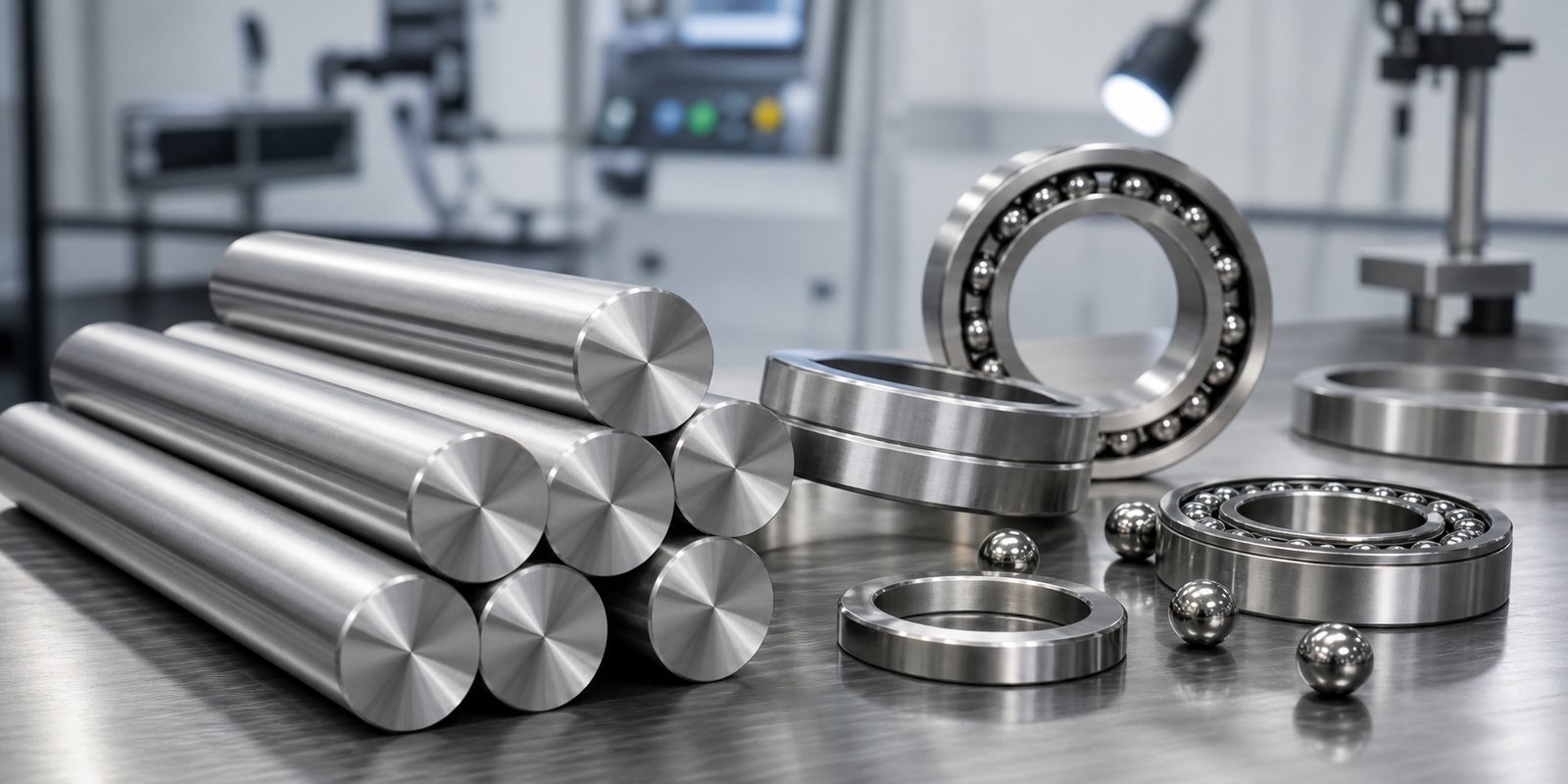
Quick answer: 440C, commonly identified as UNS S44004, is a high-carbon, high-chromium martensitic stainless steel. After appropriate hardening and tempering it can reach about 60 HRC, making it useful for bearings, valve parts, bushings and cutting or wear components, but its toughness, weldability and corrosion resistance require careful design.
What defines 440C
440C combines roughly 16–18% chromium with approximately 0.95–1.20% carbon under common product specifications. The high carbon content lets the alloy form a large carbide population and a hard martensitic matrix after heat treatment. It also distinguishes 440C from lower-carbon 440A and 440B variants.
The chromium provides stainless behavior, but some chromium is tied up in carbides. As a result, 440C does not offer the same broad corrosion resistance as low-carbon 304 or molybdenum-alloyed 316. The balance is deliberate: maximum stainless-steel hardness and wear performance rather than universal corrosion service.
Heat treatment controls performance
Material is commonly supplied annealed for machining. Hardening involves controlled preheating, austenitizing within the specified range, quenching with attention to section size and distortion, and prompt tempering. Subzero treatment may be used in qualified routes to reduce retained austenite and support dimensional stability.
Exact temperatures and times depend on the governing specification, product, furnace and required combination of hardness, toughness and stability. Overheating can increase retained austenite, grain growth or brittleness; inadequate austenitizing can leave performance below target. Every critical process should be supported by hardness and, where needed, microstructure or dimensional verification.
Property profile
| Characteristic | 440C behavior | Design implication |
|---|---|---|
| Hardness | Very high after hardening and tempering; around 60 HRC is achievable in suitable sections | Good for rolling contact, edges and wear surfaces |
| Wear resistance | High because of hard matrix and chromium carbides | Useful for bearings, bushings and valve seats |
| Corrosion resistance | Useful in mild environments but below 304/316 in many wet chloride exposures | Surface finish, cleaning and environment remain important |
| Toughness | Lower than lower-carbon martensitic or austenitic grades | Avoid sharp stress raisers and unexpected impact |
| Weldability | Difficult; cracking and heat-treatment issues require a qualified route | Prefer machining from bar or forging when practical |
Machining and grinding
Annealed 440C is machinable, but its carbide content makes it more abrasive than common austenitic grades. Stable setups, appropriate carbide tooling, positive geometry and controlled heat help protect size and finish. Stock allowance should account for heat-treatment movement and final grinding.
Hardened components are commonly finished by grinding, honing or lapping. Grinding burn, tensile residual stress and microcracking can shorten fatigue life, especially in bearing service. A controlled grinding process and final inspection are therefore part of material performance, not just appearance.
Common applications
- Bearing balls, races and rolling-contact components.
- Needle valves, ball-check valves, valve seats and pump parts.
- Bushings, wear plates, nozzles and precision gauges.
- Cutlery, surgical or industrial cutting components where the environment is compatible.
- Ball studs, pivots and textile-industry wear parts.
When another grade may be better
Choose a tougher martensitic grade if impact or crack tolerance dominates. Consider precipitation-hardening stainless when a stronger toughness-corrosion balance and easier fabrication are required. Use 316 or a higher-alloy stainless grade when wet chloride corrosion matters more than maximum hardness.
Grade selection should compare the entire operating envelope: contact stress, lubrication, impact, temperature, cleaning chemicals, chloride level, required life and repair route.
Conclusion
440C is a specialized high-hardness stainless steel. It performs best when chemistry, clean starting stock, heat treatment, grinding and service environment are treated as one engineered system.
Technical references
Carpenter Technology: CarTech 440C datasheet · ASTM A276 standard page
Discuss Your Requirement with SAKYMETAL
Send the 440C product form, dimensions, annealed or hardened condition, target hardness, machining allowance, inspection and certification requirements.
Next step: view related products or contact SAKYMETAL.
Technical note: This article is a general selection guide. Final material, condition, dimensions, testing and acceptance criteria shall follow the purchase order, governing specification and material test certificate.