
Call us now:


High-Temperature Stainless Tube Guide
Why Stainless Steel 309H Tubes Are Preferred in Industrial Applications
Learn why stainless steel 309H tubes are selected for high-temperature equipment, what conditions matter, and how to specify them responsibly.
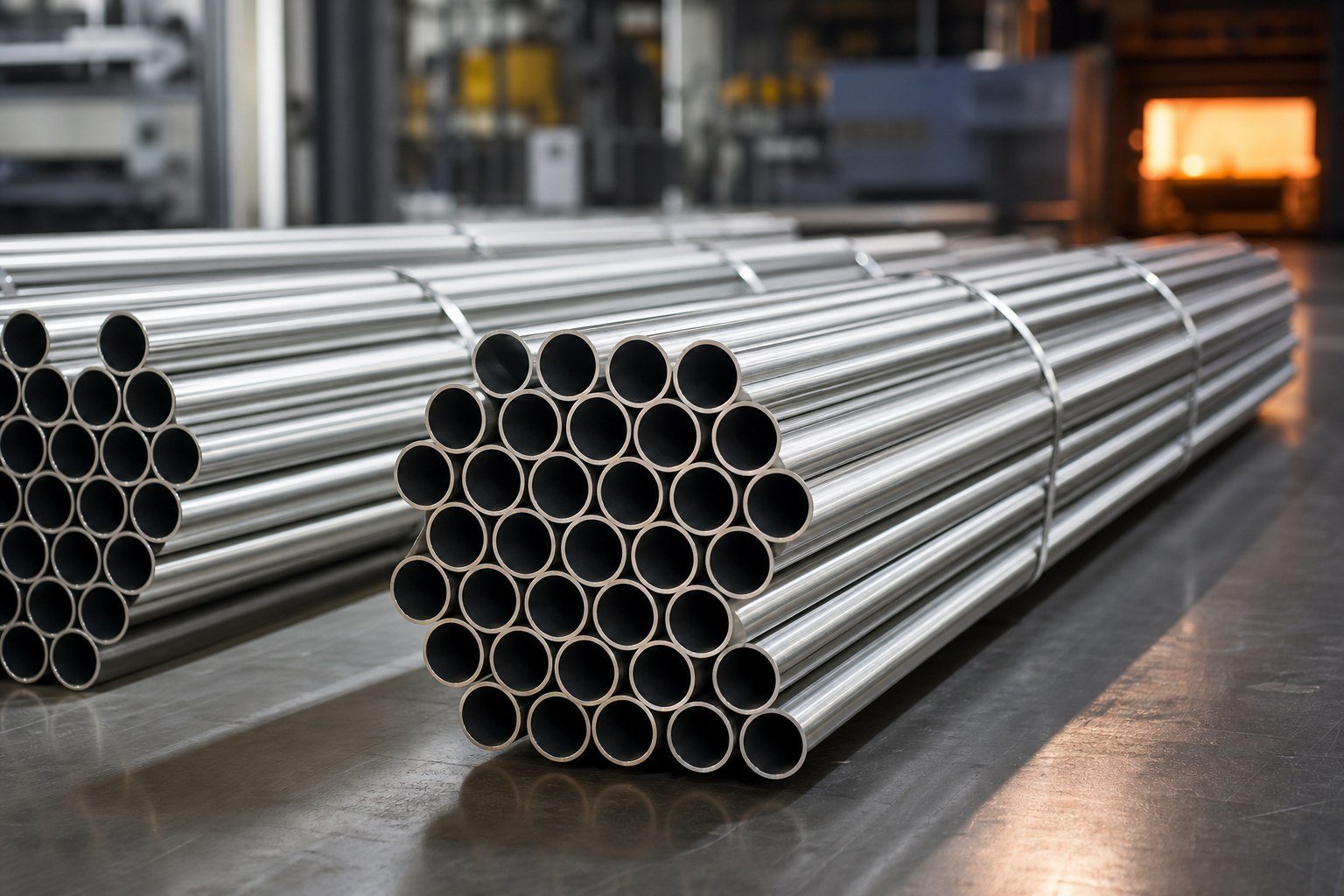
Quick answer: Stainless steel 309H tubes are selected when sustained heat, tube-wall loading and the process atmosphere justify an H-grade austenitic tube. The purchase specification must define construction, dimensions, heat treatment, testing and documentation.
Introduction
Stainless steel 309H tubes are considered when a tubular component must retain useful strength while exposed to sustained heat. The H designation identifies a controlled high-carbon version intended for elevated-temperature service under the applicable product specification. That does not make the tube a universal answer for every hot or corrosive duty. Selection still depends on the process atmosphere, metal temperature, pressure, wall thickness, fabrication route and inspection plan.
Why 309H is relevant in tube form
A tube carries or separates fluids while its wall experiences pressure, temperature gradients and thermal expansion. Stainless steel 309H tubes combine an austenitic structure with chromium- and nickel-based alloying designed for elevated-temperature performance. In correctly specified service, this balance can support oxidation resistance and creep-related strength better suited to prolonged heat exposure than a general-purpose low-temperature selection. The benefit belongs to the complete tube specification—not to the grade name alone.
High-temperature heat-exchanger sections
One practical use is in heat-exchanger tube bundles that see hot process streams or hot gas on one side of the tube wall. The circular tube geometry provides a controlled heat-transfer surface and can be expanded or welded into a qualified tubesheet design. Engineers must check the actual tube-metal temperature, fouling tendency, thermal cycling and fluid chemistry. A favorable dry-air oxidation reference does not automatically predict performance in reducing, carburizing, sulfidizing or salt-bearing atmospheres.
Boiler, superheater and reheater tubing
ASTM A213/A213M covers seamless ferritic and austenitic alloy-steel boiler, superheater and heat-exchanger tubes and includes H-grade requirements. For projects ordered to this standard, 309H tubing may be evaluated for high-temperature sections where the design code, stress basis and service environment support its use. Tube layout, supports and expansion allowance remain essential because a suitable alloy cannot compensate for excessive local stress or restricted thermal movement.
Furnace and hot-gas tube service
Stainless steel 309H tubes may also be considered for furnace-related tubular assemblies and hot-gas transfer duties where temperature exposure is central to material selection. Real suitability depends on burner chemistry, oxygen potential, contaminants, deposit formation and shutdown cycles. If the atmosphere changes during start-up or cleaning, the most severe stage—not merely the normal operating point—should guide the review.
Resistance is conditional, not absolute
The alloy can form a protective surface scale in suitable oxidizing conditions, but the scale can be damaged by thermal shock, mechanical abrasion or an incompatible atmosphere. Condensation during shutdown can create a different corrosion problem from operation at temperature. For that reason, the expected operating range, upset range and dew-point conditions should be documented before purchasing stainless steel 309H tubes.
Fabrication and joining considerations
Tube ends, bends and welds must be produced with procedures appropriate to the ordered condition. Heat input, filler selection, purge practice and post-fabrication cleaning can influence the finished assembly. Any cold work or bending requirement should be declared with the requested radius and inspection acceptance criteria. Additional examinations, corrosion tests or surface requirements are available when specified and when supported by the applicable specification.
Technical data—state the conditions
Product form: seamless stainless steel 309H tube when ordered to ASTM A213/A213M; other constructions require their own applicable tube specification. Delivery condition: heat-treated condition required by the purchase specification. Size range: Typical reference under ASTM A213/A213M-25 is 3.2 mm inside diameter to 127 mm outside diameter and 0.4 mm to 12.7 mm minimum or specified average wall thickness; other diameters may be furnished subject to the standard. Test temperature: mechanical acceptance values are normally reported at the temperature required by the applicable specification; elevated-temperature design values require the governing design code. Heat treatment: subject to the applicable specification and purchase order. Actual values shall be confirmed by the MTC.
What to include in an inquiry
A useful inquiry identifies the product as tube, the required standard and grade designation, seamless construction if applicable, outside or inside diameter basis, wall basis, length, quantity, heat-treatment condition, surface condition, end finish and inspection requirements. It should also state whether hydrostatic or nondestructive electric testing, supplementary testing, positive material identification or third-party inspection is required. Available when specified should be written into the order for every optional item.
Quality documents and acceptance
The material test certificate should be checked against the purchase order, heat number and finished tube marking. Chemical composition, mechanical results, heat treatment and required nondestructive or hydrostatic examination should be traceable to the delivered lot. Typical reference data can support early design screening, but purchasing and acceptance should rely on the applicable specification and the MTC.
Is 309H the same as a general 309 tube?
No. The H designation carries composition and elevated-temperature intent defined by the applicable grade specification. Substitution should not be based on a similar name. Confirm the exact designation, product specification, heat treatment and design-code basis before approval.
Can one maximum service temperature be quoted?
A single unconditional limit is not responsible because allowable temperature depends on stress, exposure time, atmosphere, wall thickness, fabrication and the governing code. A supplier may provide a Typical reference, but the designer must confirm the project-specific limit.
Conclusion
Stainless steel 309H tubes are preferred where the service case genuinely requires a heat-resistant tubular product and the environment is compatible with the alloy. A sound specification connects grade, tube construction, dimensions, heat treatment, testing and documentation. Share the operating and purchasing conditions with the supplier so the offered tube can be checked against the applicable standard and confirmed by the MTC.
Discuss Your Requirement with SAKYMETAL
Send SAKYMETAL the required tube standard, dimensions, wall basis, length, delivery condition, service temperature and inspection scope for a technically aligned quotation.
Next step: view stainless tube and pipe products or contact SAKYMETAL.
Technical note: Typical reference information supports early selection only. Product form, delivery condition, dimensions, test temperature, heat treatment and acceptance remain subject to the applicable specification. Actual values shall be confirmed by the MTC.