
Call us now:


Oil and Gas Duplex Pipe Guide
Top Uses of Duplex Steel Pipes in the Oil and Gas Industry
Explore realistic uses of duplex steel pipes in oil and gas, plus the service, welding, testing and specification details required for selection.
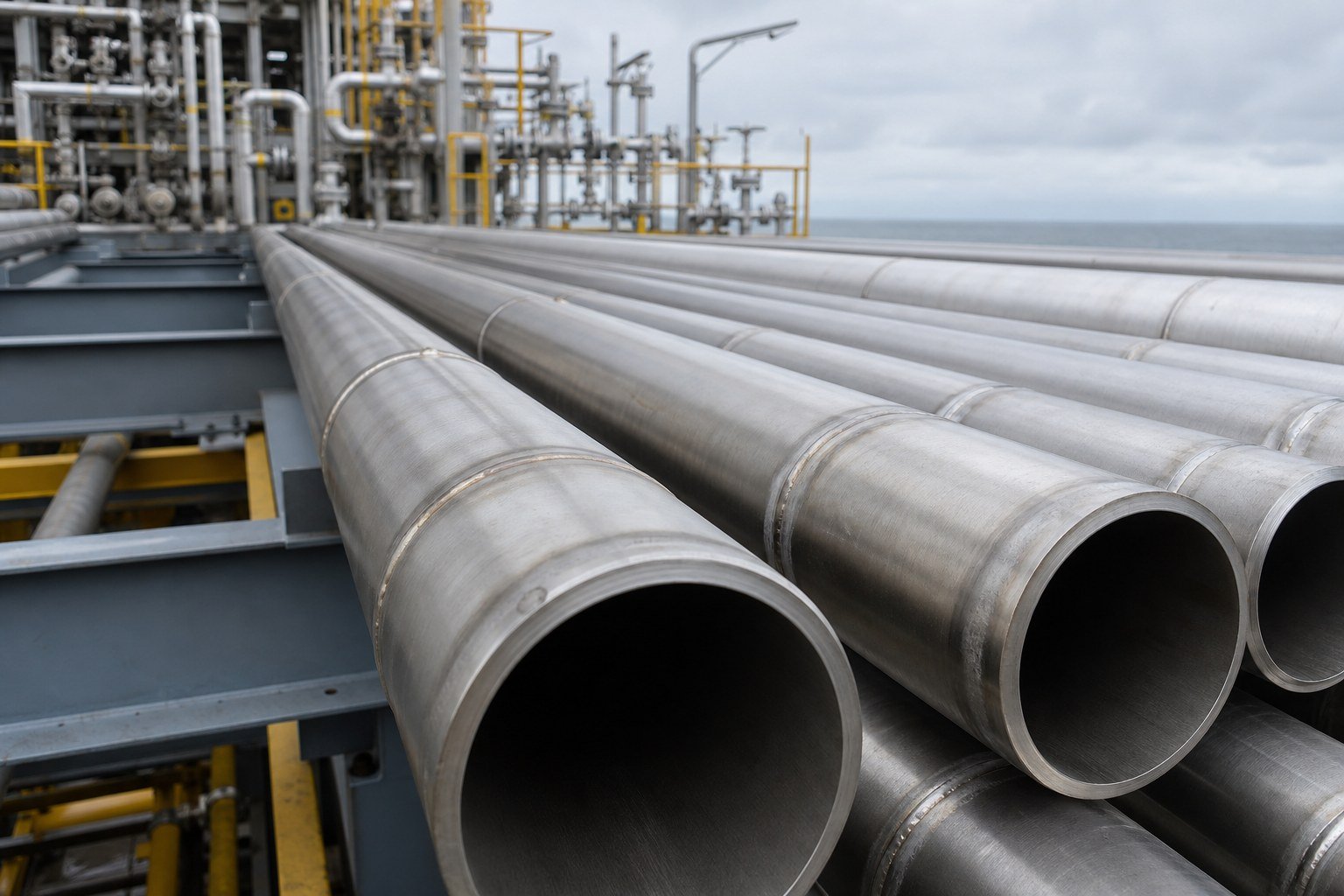
Quick answer: Duplex stainless steel pipes are used in selected oil and gas lines where chloride exposure, pressure, welding and lifecycle requirements support the material. Grade, construction, heat treatment, testing and sour-service status must be specified for the actual line.
Introduction
Duplex steel pipes are used in selected oil and gas piping systems where chloride exposure, mechanical loading and lifecycle reliability must be balanced. Their mixed ferritic-austenitic structure can provide higher strength and improved resistance to chloride stress-corrosion cracking compared with many conventional austenitic stainless steels. These advantages are conditional. Grade selection, temperature, welding, oxygen level, sour-service requirements and fluid chemistry must all be reviewed for the actual line.
1. Produced-water piping
Produced water can contain chlorides, dissolved gases, treatment chemicals, suspended solids and traces of hydrocarbons. Duplex stainless steel pipe is often considered for transfer or treatment lines when the documented water chemistry and operating temperature justify it. The assessment should include stagnant zones, deposits, velocity, erosion risk and shutdown conditions. Corrosion allowance and monitoring strategy remain project decisions rather than assumptions attached to the material name.
2. Seawater injection lines
Oilfield water-injection systems may expose pipe interiors to aerated or de-aerated seawater, biocide regimes and intermittent operation. Duplex steel pipes can be a practical choice when the specified grade, fabrication route and design controls match the chloride level and temperature. The engineer should distinguish continuously treated water from upset or stagnant conditions, because oxygen and microbiological activity can change the corrosion mechanism.
3. Offshore topside utility piping
On offshore oil and gas facilities, selected cooling-water, wash-water and firewater lines may use duplex stainless steel pipe to combine mechanical efficiency with resistance appropriate to saline exposure. This is still an oil-and-gas facility use, not a blanket recommendation for every marine environment. External salt deposition, insulation condition, crevices, supports and coating interfaces should be addressed in the piping design.
4. Process piping carrying chloride-bearing fluids
Duplex pipe may be evaluated for process lines carrying water-rich hydrocarbon streams, brines or treatment fluids containing chlorides. The relevant limits depend on grade chemistry, temperature, pH, partial pressures, contaminants and flow regime. If sour conditions apply, material qualification must meet the project’s applicable sour-service requirements; a generic duplex designation alone does not demonstrate compliance.
5. Gathering and transfer piping within facilities
Gathering or transfer lines inside an oil and gas installation may benefit from the strength of duplex pipe when pressure and corrosion considerations support a thinner design wall under the governing piping code. Any weight or flow-area advantage must be calculated, not presumed. Minimum wall, mill tolerance, corrosion allowance, bending strain and joining details must all remain within the design basis.
Why strength matters
Higher specified strength can help the designer meet pressure requirements efficiently, but the final wall thickness is controlled by the governing code and project factors. Thinner is not automatically better: handling, vibration, external loads, weldability, erosion and minimum practical wall may control. The correct comparison is a code calculation using the exact grade and product specification offered.
Welding and phase balance
Duplex pipe performance depends on a suitable balance between ferritic and austenitic phases after manufacture and welding. Qualified procedures should control heat input, interpass temperature, filler selection and shielding or purge conditions. Repairs and field welds require the same discipline. When ferrite measurement, impact testing, corrosion testing or weld procedure qualification is required, it should appear in the purchase and fabrication documents.
Technical data—state the conditions
Product form: seamless or straight-seam welded duplex stainless steel pipe under ASTM A790/A790M when applicable; electric-fusion-welded pipe with filler metal may be ordered to ASTM A928/A928M when applicable. Delivery condition: solution heat-treated and rapidly cooled as required by the selected grade and product specification. Size range: NPS, schedule, outside diameter and wall thickness are subject to the applicable specification, design code and purchase order. Test temperature: room-temperature mechanical and corrosion acceptance tests apply only when required by the cited specification; low-temperature impact or service-specific tests are Available when specified. Heat-treatment temperature and cooling practice are grade-dependent. Actual values shall be confirmed by the MTC.
Inspection and testing options
The inspection plan may include dimensional checks, visual examination, hydrostatic or nondestructive electric testing, weld examination, positive material identification and supplementary corrosion or impact testing. The necessary scope depends on pipe construction and service criticality. Subject to the applicable specification should be used for mandatory tests, while optional examinations should be stated as Available when specified.
What buyers should specify
A complete inquiry should define the exact duplex grade, pipe manufacturing route, ASTM or other product standard, NPS or outside diameter, schedule or wall thickness, length, end preparation, solution-annealed condition, quantity and required marking. Add the design code, fluid description, operating and design temperatures, chloride level, pressure, sour-service status and supplementary test requirements where relevant. This allows the supplier to respond to the real duty rather than a broad industry label.
Are duplex pipes suitable for every oil and gas line?
No. They are suitable only where the selected grade and delivered condition meet the service environment and governing specifications. Hydrocarbon composition, water phase, chlorides, temperature, sour conditions, welding and inspection can change the decision.
Are all duplex pipe standards interchangeable?
No. Standards distinguish manufacturing routes, dimensions, testing and acceptance. ASTM A790/A790M and ASTM A928/A928M, for example, cover different pipe constructions. The purchase order must name the required standard and construction, and the MTC must confirm the delivered material.
Conclusion
The strongest oil-and-gas case for duplex steel pipes is a documented one: a known fluid, a defined temperature and pressure envelope, a qualified manufacturing and welding route, and an inspection plan tied to the applicable specification. When these conditions are clear, duplex pipe can offer a useful combination of strength and corrosion resistance without relying on absolute claims.
Discuss Your Requirement with SAKYMETAL
Provide SAKYMETAL with the exact duplex grade, pipe standard, NPS or outside diameter, wall thickness, service fluid, temperature, pressure and supplementary inspection requirements.
Next step: review a duplex pipe product example, browse duplex tube and pipe, or contact SAKYMETAL.
Technical note: Typical reference information supports early selection only. Product form, delivery condition, dimensions, test temperature, heat treatment and acceptance remain subject to the applicable specification. Actual values shall be confirmed by the MTC.