
Call us now:


Stainless Steel Corrosion Guide
Does Stainless Steel Rust? Causes, Warning Signs and Prevention
Stainless steel is corrosion resistant, not corrosion proof. Learn why staining, pitting and crevice attack occur and how grade selection, design, fabrication and maintenance reduce the risk.
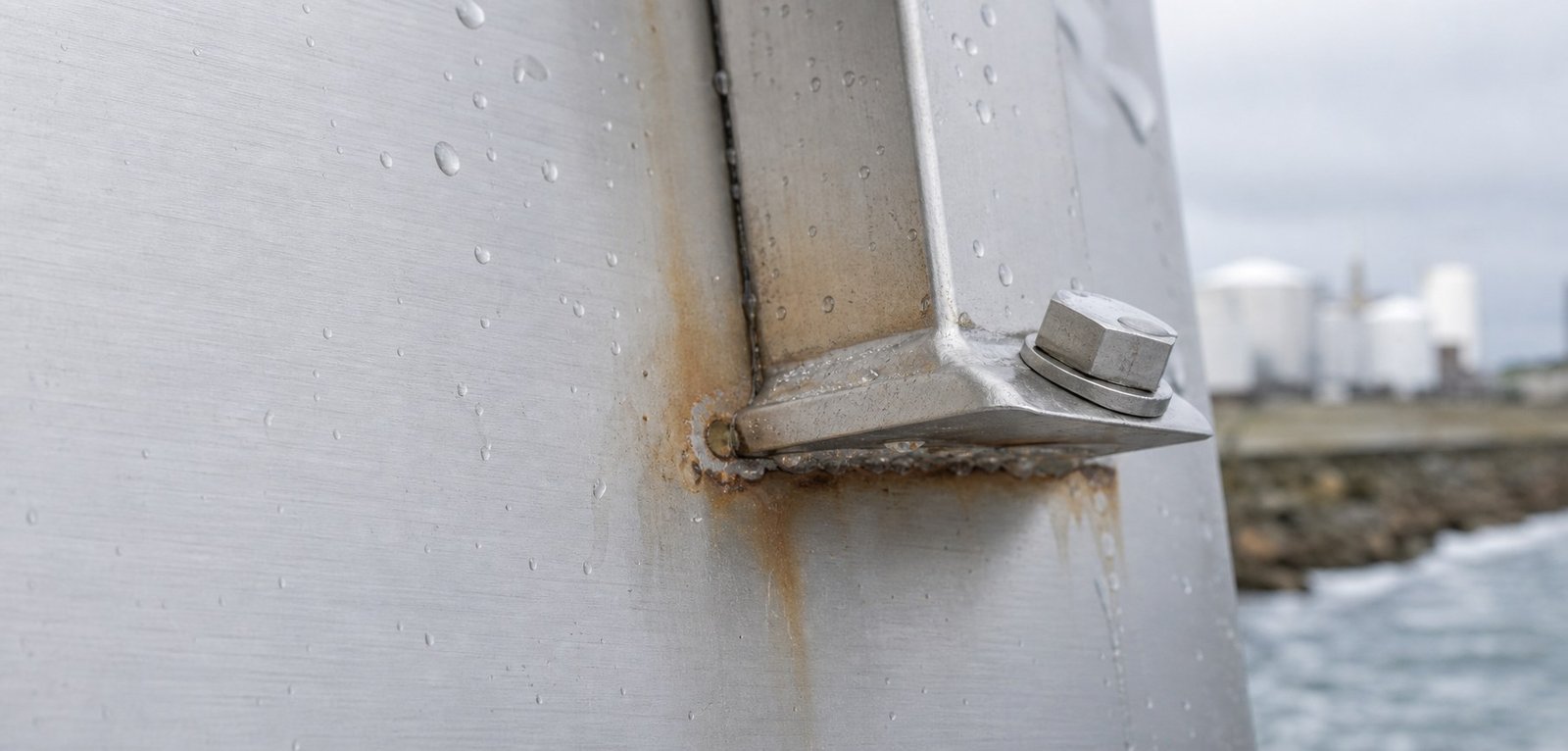
Quick answer: Yes, stainless steel can rust or corrode when its passive surface film is damaged or cannot remain stable. Chlorides, deposits, tight crevices, iron contamination, unsuitable grade selection, poor weld cleaning and harsh chemicals are common contributors. Correct material selection and surface care make the difference.
Why stainless steel is usually resistant
Stainless steel contains sufficient chromium to form a thin, adherent oxide film on the surface in suitable oxidizing environments. This passive film separates the underlying metal from the environment and greatly slows the electrochemical reactions that cause corrosion. If the film is lightly scratched, it can normally reform when enough oxygen is available.
The word “stainless” therefore describes a property created by alloy chemistry and surface condition; it does not promise immunity. Stainless steels are a family of grades with different chromium, nickel, molybdenum, nitrogen and other alloy contents. A grade that performs well indoors may not be appropriate beside seawater, inside a chloride-bearing process or under acidic deposits.
Rust, tea staining and embedded iron
Brown discoloration on stainless steel can come from several sources. Tea staining is a visible atmospheric discoloration often associated with chloride deposits and sheltered surfaces. Embedded carbon-steel particles from grinding tools, wire brushes, handling equipment or nearby fabrication can also rust and make the stainless surface appear to be failing.
Localized brown marks can also indicate genuine attack of the stainless substrate. Cleaning a stain without investigating its source may hide a recurring design, material or fabrication problem. Where service is critical, inspect the affected area and determine whether the issue is superficial contamination, pitting, crevice corrosion or another mechanism.
Chlorides and salt deposits
Chlorides from seawater, coastal air, de-icing salts, cleaning agents and process fluids can destabilize the passive film. As moisture evaporates, salts may concentrate on the surface. A small droplet or deposit can create a much more aggressive local environment than the bulk atmosphere suggests.
Grade choice matters. Molybdenum- and nitrogen-alloyed stainless grades generally provide better resistance to chloride pitting than basic grades, but no common stainless steel is universally immune. Temperature, chloride concentration, acidity, oxygen availability and exposure time must be considered together.
Pitting corrosion
Pitting begins when the passive film breaks down at a local point. The resulting cavity can become chemically more aggressive as it grows, so a small surface opening may conceal deeper penetration. Pits are particularly concerning in thin-walled vessels, tubing and hygiene-critical equipment because localized loss can cause leakage or contamination before broad surface rust is obvious.
Crevice corrosion
Tight gaps under washers, gaskets, deposits, lap joints, fastener heads and poorly drained details can restrict oxygen renewal. The passive film inside the crevice then becomes less stable while chlorides and acidity concentrate. A grade that remains bright on an open, rain-washed surface may corrode inside a sheltered crevice.
Good design avoids unnecessary overlaps, stagnant pockets and unsealed joints. Drainage, access for cleaning and compatible gasket and fastener systems should be considered at the drawing stage.
Fabrication contamination and heat tint
Tools previously used on carbon steel can transfer iron particles to stainless surfaces. Weld spatter, embedded scale, deep scratches and rough grinding can trap contaminants. Heat tint around a weld indicates a high-temperature oxide and an underlying chromium-depleted layer that may reduce local corrosion resistance.
Use dedicated clean tools for stainless fabrication. Remove weld defects and treat the surface according to the project specification. Pickling, controlled mechanical cleaning, passivation or electropolishing may be appropriate depending on the grade, finish and service. Hazardous chemical treatments must be performed by qualified personnel with correct environmental and safety controls.
Common causes and practical controls
| Cause | Typical warning sign | Practical control |
|---|---|---|
| Chloride deposits | Tea staining or isolated pits | Select a suitable grade, wash exposed surfaces and avoid salt accumulation |
| Tight crevices | Attack under washers, gaskets or deposits | Improve joint design, sealing, drainage and cleaning access |
| Carbon-steel contamination | Orange spots after fabrication | Use dedicated tools and remove embedded iron correctly |
| Uncleaned weld heat tint | Discoloration and localized attack near welds | Specify qualified post-weld cleaning and surface restoration |
| Wrong grade | Recurring attack despite cleaning | Review chemistry, temperature, pH, chlorides and service conditions |
| Poor maintenance | Dirt and salts on sheltered areas | Set an inspection and washing interval based on exposure |
Can 304 stainless steel rust?
Yes. 304 can perform very well in many indoor, food-service and mild atmospheric applications, but it can stain or pit in chloride-rich or poorly cleaned environments. Substituting 316 or another higher-alloyed grade may improve resistance in some conditions, but it is not a universal cure. The actual environment and component design still need review.
Can 316 stainless steel rust?
Yes. The molybdenum in 316 generally improves resistance to chloride pitting compared with 304, yet concentrated salts, higher temperatures, stagnant crevices and severe process chemicals can still cause corrosion. Coastal exposure also varies greatly with distance from the sea, sheltering, rainfall and cleaning frequency.
How to clean surface rust safely
First identify whether the mark is loose contamination or attack of the substrate. Use a stainless-compatible cleaning method and follow the equipment manufacturer’s instructions. Avoid chloride-containing cleaners and carbon-steel brushes. Rinse residues thoroughly and restore the specified finish. Deep pits, recurring staining, leaking surfaces or corrosion in load-bearing parts require technical evaluation rather than cosmetic cleaning alone.
How to prevent corrosion before purchase
Provide the supplier with the fluid or atmosphere, temperature range, chemical concentration, chloride level, cleaning regime, pressure, product form, fabrication route, surface finish and inspection requirements. State whether pickling, passivation, electropolishing, weld cleaning, protective packaging or special handling is required. Confirm the grade and heat number through the MTC.
For existing equipment, combine visual inspection with an appropriate maintenance plan. Clean sheltered areas before salts accumulate, repair damaged drainage details and prevent contact with unprotected carbon steel where galvanic or contamination issues may arise.
Technical references
Outokumpu: Does stainless steel ever rust? · Outokumpu: Corrosion resistance of stainless steel · Outokumpu: Post-fabrication treatment
Discuss Your Stainless Steel Requirement with SAKYMETAL
Send SAKYMETAL the service environment, temperature, chlorides, product form, dimensions, finish and inspection requirements so the proposed material can be reviewed against the application.
Next step: view stainless steel products or contact SAKYMETAL.
Technical note: Corrosion performance is application-specific. General grade comparisons do not replace project corrosion data, the applicable design code or verification of delivered material by the MTC.