
Call us now:


4140 Yield Strength Guide
Yield Stress of 4140 Steel: How Strong Can It Get Under Load?
Yield stress is the point where 4140 begins to retain permanent deformation, and it changes significantly with heat treatment, hardness and section size.
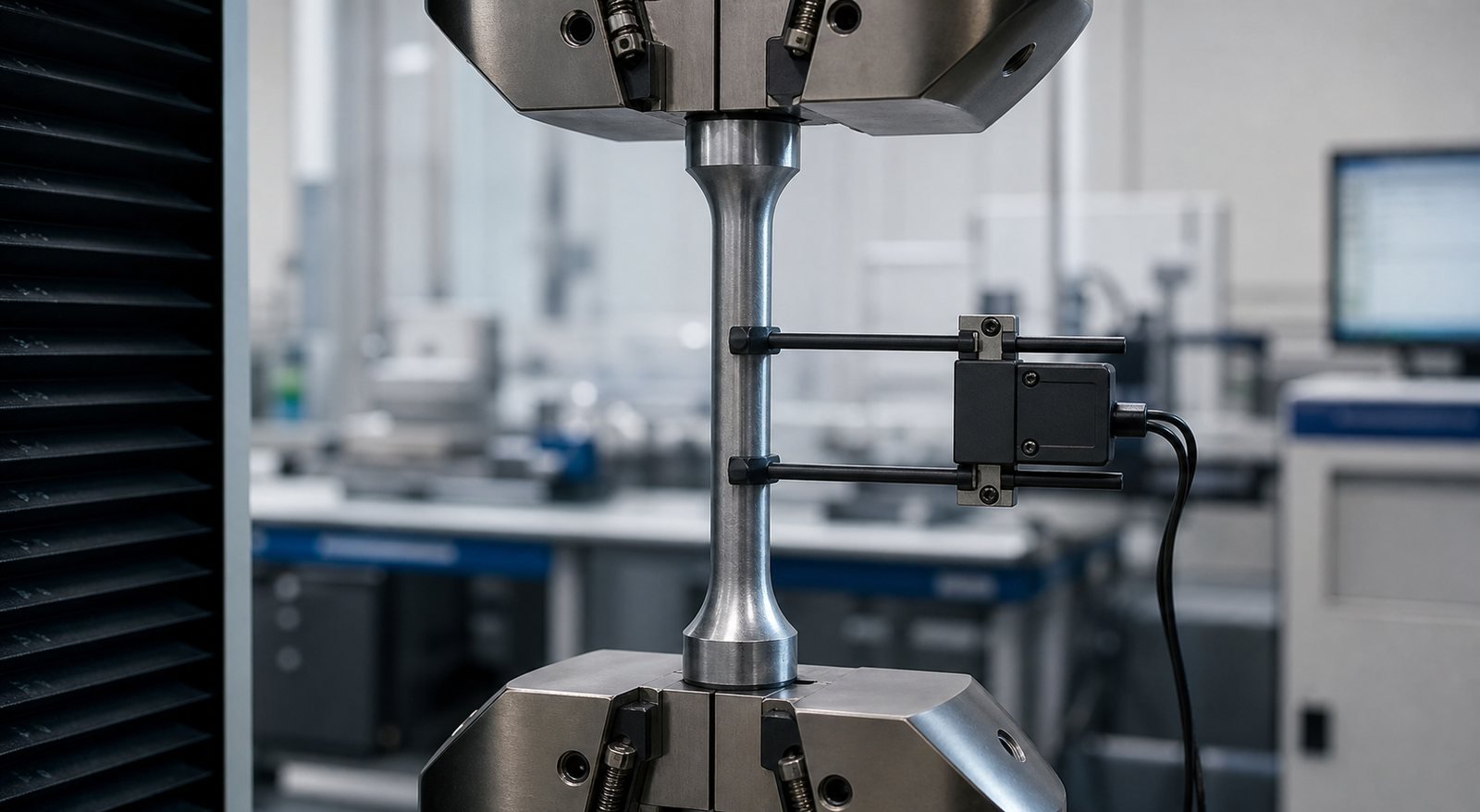
Quick answer: There is no universal yield stress for 4140. Annealed, normalized and quenched-and-tempered conditions can have very different yield strengths. The value used for design or acceptance must come from the governing specification, approved design data or the MTC for the applicable product and final condition.
What yield stress means
Below the elastic limit, a loaded component approximately returns to its original dimensions when the load is removed. Once plastic deformation begins, some dimensional change remains. Because the transition is not always sharply defined, metallic materials are often reported with a 0.2% offset yield or proof strength under the applicable test method.
Yield strength is different from ultimate tensile strength. UTS is the highest engineering stress reached in the tensile test; yielding occurs earlier and often governs shafts, bolts, frames and pressure components that must retain alignment or preload.
Why the number changes
Heat treatment is the primary control. Annealed 4140 is softer and easier to machine. Normalizing produces a refined structure at an intermediate level. Quenching and tempering can raise yield strength substantially, with the tempering condition selecting the balance between strength, ductility and toughness.
Chemistry within the grade range, austenitizing, quench rate, tempering, section size and test location all matter. Cold work can raise yield strength but may introduce anisotropy and residual stress.
Condition and design behavior
| Condition | Yield behavior | Typical planning issue |
|---|---|---|
| Annealed | Lower yield and hardness | Machining before final heat treatment |
| Normalized | Moderate yield with refined structure | General parts or preparation for later processing |
| Quenched and tempered | High and adjustable yield | Verify hardness, tensile tests and section response |
| Prehardened | Controlled shop-ready strength range | Coordinate machinability and final property needs |
| Surface hardened | Core yield remains critical | Hard case must be supported by adequate core strength |
Section size and through-hardening
A thick bar cools unevenly during quenching. The surface can develop more martensite than the center, so yield strength and hardness may vary through the section. 4140 has better hardenability than plain carbon steel, but large diameters still require process review.
Sampling location and orientation must follow the product specification. A separately heat-treated test coupon may not represent a heavy component unless the heat-treatment and qualification plan establish equivalence.
From yield strength to allowable load
Design codes apply safety or resistance factors and may limit allowable stress based on yield, tensile strength, fatigue, buckling, creep or fracture. The largest yield number is not automatically the safest condition because higher hardness can reduce toughness or increase sensitivity to hydrogen and stress concentration.
For combined bending and torsion, notches and multiaxial loading, component analysis should evaluate local stress rather than dividing force by nominal area alone. Temperature and environment may reduce available properties or introduce another failure mode.
How to specify and verify
- State the product standard, product form and exact delivery condition.
- Specify yield and tensile requirements together with elongation or toughness where needed.
- Define specimen orientation, test location and test temperature.
- Control final hardness and heat-treatment responsibility.
- Review the MTC heat number and test results against the purchase order.
- Do not accept a hardness-to-yield conversion unless the governing document explicitly permits it.
Conclusion
4140 yield stress can be tailored over a broad range, but it is only meaningful when tied to condition, section, test method and acceptance standard. Use verified product data, then apply the relevant engineering design rules.
Technical references
ASTM E8/E8M tensile testing standard · SAE J404 alloy steel compositions
Discuss Your Requirement with SAKYMETAL
Send the product form, section size, final condition, yield/tensile requirements, test location, impact requirement and certificate scope.
Next step: view related products or contact SAKYMETAL.
Technical note: This article is a general selection guide. Final material, condition, dimensions, testing and acceptance criteria shall follow the purchase order, governing specification and material test certificate.