
Call us now:


4140 Grade Fundamentals
What Type of Steel Is 4140? Composition, Class and Heat Treatment
4140 is a medium-carbon chromium-molybdenum low-alloy steel whose properties are developed primarily through heat treatment.
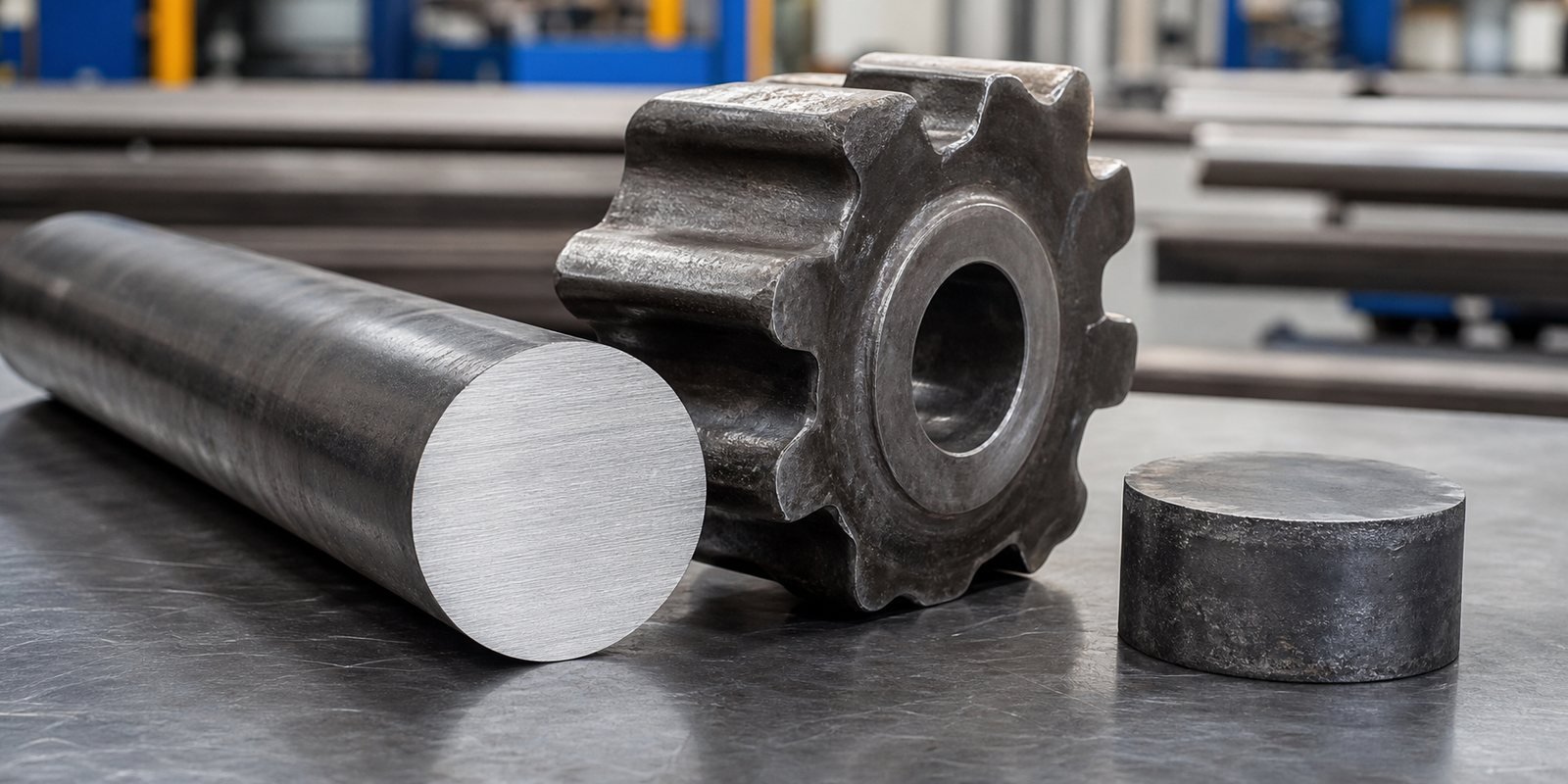
Quick answer: SAE/AISI 4140 belongs to the 41xx chromium-molybdenum family. It contains about 0.40% carbon with chromium and molybdenum additions that improve hardenability and tempering response. It is not stainless steel, tool steel by default, or a complete purchasing specification.
Reading the 4140 designation
In the traditional SAE/AISI numbering system, the 41xx family identifies chromium-molybdenum alloy steels, while the final two digits indicate the approximate nominal carbon level in hundredths of a percent. The designation is a grade identity, not a promise of one hardness or strength.
Equivalent or similar grades in other systems must be checked by the exact governing specification. A familiar cross-reference can hide differences in chemistry limits, cleanliness, heat treatment, testing or product scope.
Typical composition roles
| Element | Approximate role in 4140 |
|---|---|
| Carbon | Supports martensitic hardening, strength and wear response |
| Chromium | Improves hardenability and contributes to temper and wear response |
| Molybdenum | Supports hardenability and resistance to temper softening |
| Manganese | Contributes to deoxidation and hardenability |
| Silicon | Deoxidizer and solid-solution strengthening contribution |
| Iron | Balance of the alloy |
Why it is called low-alloy steel
Low-alloy steels contain intentional alloying additions beyond those of plain carbon steel but at levels far below highly alloyed stainless or nickel alloys. 4140’s chromium level is not sufficient to produce the stainless passive behavior associated with approximately 10.5% or more chromium. Unprotected 4140 can rust in wet service.
Protective oil, paint, plating, conversion coating or another surface system may be required. Coating choice must consider hydrogen embrittlement if the component is hardened to a sensitive level.
Common delivery conditions
Annealed 4140 is relatively soft for machining and subsequent hardening. Normalized material has a refined structure and another strength level. Quenched-and-tempered or “prehard” 4140 is supplied in a specified hardness or mechanical-property range for direct machining or final finishing.
Cold-finished bar can offer tighter size and surface, but straightening and cold work affect residual stress. Forged product can improve shape and grain flow for a specific component. Product form should match manufacturing route and performance.
What 4140 is good at
- Shafts, axles, pins, gears and couplings under combined loading.
- Studs, tie rods and high-strength machine components.
- Tool holders, arbors, fixtures and mold bases.
- Oilfield, mining and hydraulic components under an industry-specific specification.
- Components with an induction-hardened or nitrided wear surface over a tough core.
What an order must add
A technically complete order identifies SAE 4140 under the correct ASTM, SAE, AMS, EN or customer specification; product form; size and tolerance; delivery condition; hardness or mechanical properties; surface; testing; marking and certification.
The final heat-treatment route and section size determine achievable properties. If the buyer will heat treat the material, state the incoming annealed structure, decarburization and ultrasonic quality required for that route.
Conclusion
4140 is best understood as a versatile, heat-treatable Cr-Mo low-alloy steel. Its real capability comes from pairing grade chemistry with the correct product standard, condition and final processing.
Technical references
SAE J404 chemical compositions · SAE J412 steel characteristics
Discuss Your Requirement with SAKYMETAL
Provide the desired 4140 product form, dimensions, condition, hardness or mechanical properties, NDT and certificate requirements.
Next step: view related products or contact SAKYMETAL.
Technical note: This article is a general selection guide. Final material, condition, dimensions, testing and acceptance criteria shall follow the purchase order, governing specification and material test certificate.