
Call us now:


Carbon Steel HSS Guide
ASTM A500 Structural Steel Tubing: Grades, Properties and Applications
Understand what ASTM A500 covers, how Grades B, C and D differ, and what buyers should place on a structural tubing order.
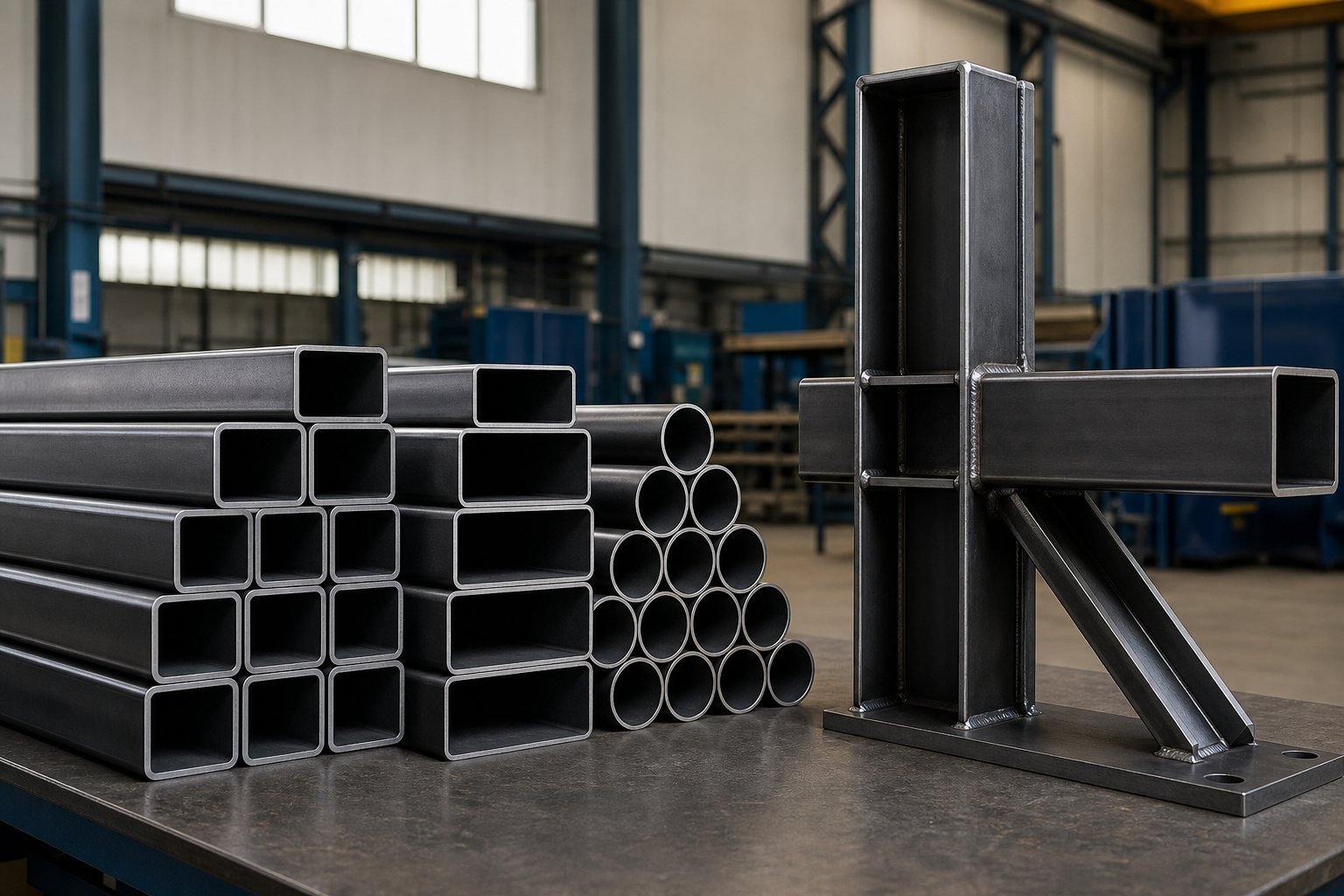
Quick answer: ASTM A500/A500M covers cold-formed welded and seamless carbon steel structural tubing in round, square, rectangular and special shapes for structural and general purposes. Grade, shape, size, wall thickness and standard edition must be specified. ASTM identifies A500/A500M-23 as the active edition at the time of writing.
Scope of ASTM A500/A500M
The ASTM specification covers cold-formed welded and seamless carbon steel tubing in round, square, rectangular and special shapes. It is intended for welded, riveted or bolted construction in buildings, bridges and general structural work.
A500 is an HSS specification, not a catch-all designation for every steel pipe or mechanical tube. Pressure pipe, line pipe, mechanical tubing and stainless structural tubing have different governing requirements.
Grades B, C and D at a glance
Exact chemical limits, tensile strength, yield strength and elongation are controlled by the ordered edition. Structural design values should come from the governing design code and certified material data, not a generic online table.
| Grade | General positioning | Selection note |
|---|---|---|
| Grade B | Established structural grade used in round and shaped tubing | Confirm required strength values for the selected shape and current edition. |
| Grade C | Common higher-strength structural choice | Do not assume the same yield value for round and shaped tubing without checking the standard. |
| Grade D | Heat-treated grade | ASTM notes that Grade D requires heat treatment; availability should be confirmed early. |
How A500 tubing is manufactured and tested
Welded A500 tubing is formed from flat-rolled steel and joined by an electric-resistance-welding process. The longitudinal joint must develop the structural design strength of the section. Seamless product is also within the scope.
The specification includes chemical requirements, tensile testing, flattening requirements for round tubing, dimensional controls, workmanship and inspection provisions. The manufacturer should maintain heat and product traceability through production.
Typical applications
- Building columns, trusses and bracing members
- Architectural exposed structural steel
- Equipment frames, racks and machine bases
- Sign, canopy and transportation structures
- Welded or bolted general fabrication where structural HSS is specified
A500 ordering checklist
- Specify ASTM A500/A500M and the required edition.
- State Grade B, C or D.
- Define round, square, rectangular or special shape.
- Provide outside dimensions, nominal wall thickness and length.
- State SI or inch-pound ordering basis without mixing systems.
- Add coating, galvanizing, supplementary testing, marking, packing and certification requirements.
- Confirm any project-specific toughness or dynamically loaded service requirement with the engineer.
Dimensions, corners and fabrication details
Nominal outside dimension and nominal wall thickness are only part of HSS geometry. Square and rectangular sections also have corner radii, wall-thickness tolerances, straightness, twist and mass considerations. These affect connection detailing, fit-up and calculated section properties.
Cold forming creates different geometry and residual-stress patterns from a built-up box section. Designers and fabricators should use section properties and tolerances that correspond to the actual ordered product. Cutting, coping, welding and galvanizing plans should be coordinated before procurement.
A500 versus other tubing specifications
ASTM A500 is commonly confused with ASTM A53 pipe and ASTM A513 mechanical tubing. A53 is a pipe specification used for mechanical and pressure-related applications within its scope; A513 addresses electric-resistance-welded carbon and alloy mechanical tubing. ASTM A1085 is another structural HSS specification with its own requirements.
A project drawing should name the correct standard. Similar outside dimensions do not make products interchangeable because strength, tolerances, testing, intended use and design recognition can differ.
Certification and receiving inspection
At receipt, compare the section markings, bundle tags and material certificate with the purchase order. Check grade, size, heat or lot identification, chemistry and mechanical results. Measure representative outside dimensions, wall thickness, length, straightness and shape condition using the agreed inspection plan.
Surface dents, severe weld defects, twist, damage at ends or corrosion can affect fabrication. Acceptance must follow the specification and contract rather than appearance alone. Preserve identification when members are cut so the shop can maintain traceability to finished assemblies.
Frequently asked questions
Is ASTM A500 pipe or structural tubing?
It is a structural tubing specification covering round and shaped hollow sections. It should not be substituted automatically for pressure pipe or mechanical tubing specifications.
What is the difference between A500 Grade B and Grade C?
Grade C is generally selected for higher minimum strength, but the applicable values depend on shape and standard edition. Confirm the current table and design requirements.
Does ASTM A500 cover square and rectangular tubing?
Yes. It covers round, square, rectangular and special-shape cold-formed welded and seamless carbon steel structural tubing.
Can A500 tubing be welded?
The specification is intended for welded, riveted or bolted construction. Welding procedure, consumable and design still need to suit the grade, thickness and applicable fabrication code.
Technical references
Discuss Your Requirement with SAKYMETAL
Send the grade, shape, outside dimensions, wall thickness, length, quantity, coating and certification requirements for an availability review.
View related products or send your specification for a quotation.
Engineering note: Typical values are informative, not acceptance criteria. Confirm the applicable standard edition, grade designation, product form, dimensions, delivery condition and test requirements on the purchase order and material test certificate.