
Call us now:


Stainless Steel Circle Guide
Stainless Steel Circle: Benefits, Applications, and Uses
Understand stainless steel circle benefits, realistic applications, ordering conditions, surface choices and quality checks for formed round components.
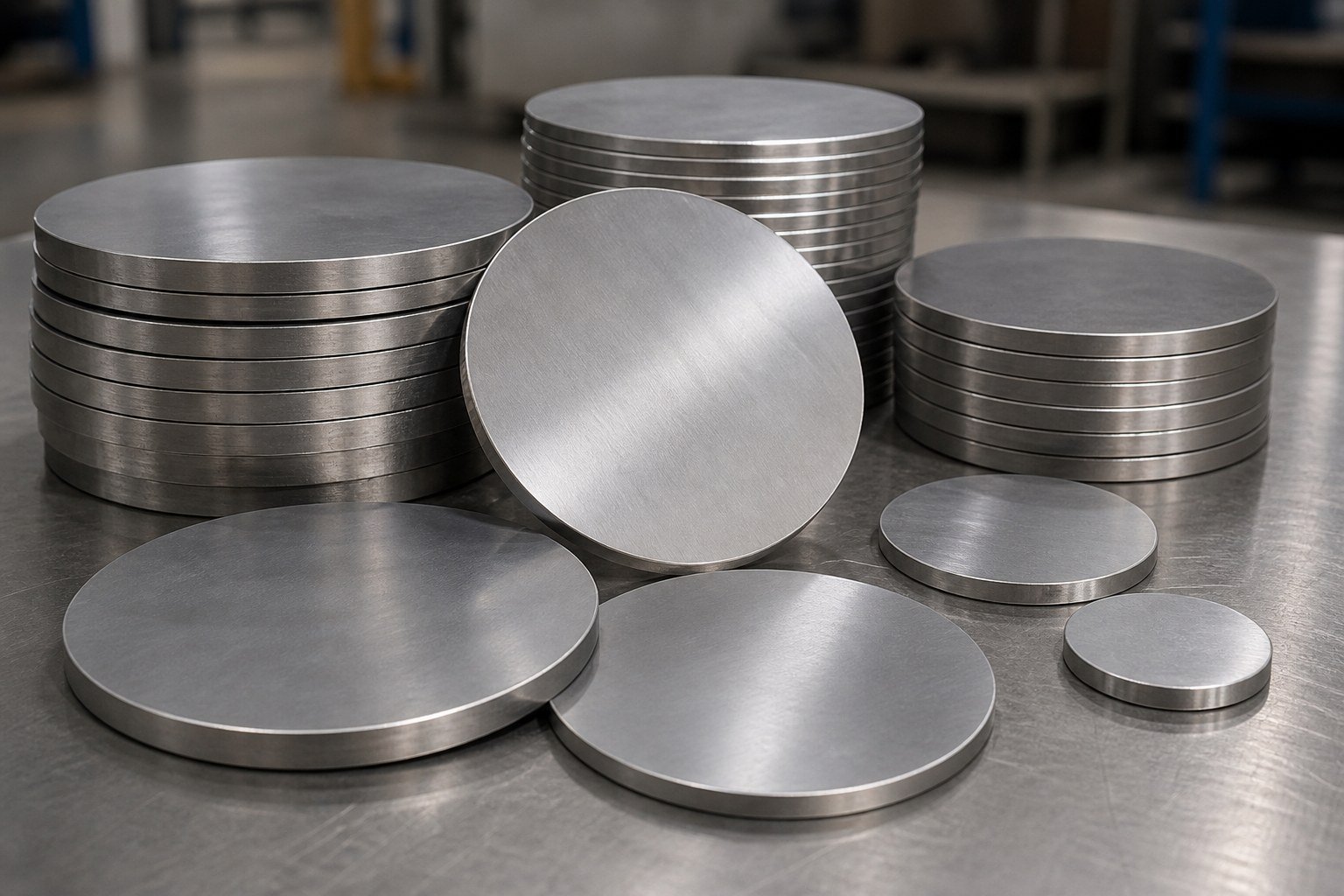
Quick answer: A stainless steel circle is a flat round blank selected for a defined forming or fabrication route. Its value depends on the ordered grade, diameter, thickness, flatness, edge, surface and traceability—not on the product name alone.
Introduction
A stainless steel circle is a flat, round blank cut from stainless sheet or plate for direct use or further forming. Its value comes from geometry, material consistency and a controlled surface—not from being a separate alloy category. Buyers should specify the circle’s grade, diameter, thickness, edge condition, surface finish, flatness and delivery condition according to the intended forming or fabrication route.
What makes a stainless steel circle useful
Starting with a circular blank reduces the amount of trimming required for round components. It can simplify blank positioning for spinning, drawing or pressing and can make material planning more predictable than cutting each blank at the fabrication station. The benefit depends on nesting layout, cut width, diameter tolerance and the buyer’s process; actual yield should be calculated for the ordered dimensions.
Benefit 1: repeatable round geometry
A controlled outside diameter helps the downstream tool or chuck locate the blank consistently. Repeatability matters when the circle is centered before drawing, spinning or pressing. Diameter tolerance, roundness and edge quality should be agreed in the purchase order because a nominal diameter alone does not define how the blank will run in the customer’s equipment.
Benefit 2: forming-ready material selection
Stainless steel circles can be supplied from material selected for the required forming operation. Deep drawing, shallow pressing and spinning impose different strains, so grade, temper, thickness tolerance and grain-related properties must suit the process. Typical reference formability descriptions are useful for planning, but trial results and the actual material certificate should guide production approval.
Benefit 3: controlled surface appearance
Where the formed component retains a visible surface, the starting finish and protective film can affect polishing time and cosmetic rejection. A circle can be ordered with a mill or polished finish when the source material and processing route support it. Surface finish and film are Available when specified. Tool cleanliness, lubrication and handling after delivery remain important because forming can mark an otherwise acceptable blank.
Application: cookware and kitchenware blanks
One common use is as the starting blank for round cookware and kitchenware components produced by drawing or spinning. The specified stainless steel circle must match the forming depth, tooling, final surface and any food-contact requirements applicable to the finished item. The circle supplier provides the material and blank geometry; validation of the finished article remains with the manufacturer.
Application: lids, covers and shallow formed parts
Stainless steel circles are also used for circular lids, covers and shallow pressed parts where consistent diameter helps control tooling alignment and trimming. Edge burr direction and cut quality can affect operator safety and forming behavior, so deburring or a defined edge condition should be stated when required.
Application: spun or pressed equipment components
For equipment fabrication, a circle may be spun or pressed into a shallow dish, guard or round enclosure component. Suitability depends on diameter-to-thickness ratio, forming severity, tooling and any intermediate annealing plan. If the finished part is pressure-retaining, the applicable design and material requirements for the finished component must be identified before the blank is ordered.
Cutting route and edge quality
Laser, plasma, waterjet, shearing or blanking can produce different heat-affected edges, burr levels and economic results. The most suitable route depends on thickness, diameter, quantity and downstream processing. A buyer who plans severe forming should disclose edge sensitivity and any machining allowance. Cut method and deburring are Available when specified, subject to production capability.
Technical data—state the conditions
Product form: flat circular blank cut from stainless steel sheet or plate. Delivery condition: as cut, levelled, annealed or surface-finished only as stated in the purchase order. Size range: diameter and thickness are subject to the selected source material, cutting process and agreed tolerances; no universal range applies. Test temperature: mechanical properties generally refer to the test temperature required by the applicable source-material specification, not the temperature of the later forming operation or final service. Heat-treatment state: subject to the applicable specification and ordered grade. Reference standard: ASTM A240/A240M may apply to the source stainless steel plate, sheet or strip; circle dimensions and edge requirements remain purchase-order items. Actual values shall be confirmed by the MTC.
How to specify a stainless steel circle
State the stainless grade, source-material standard, diameter, thickness, dimensional tolerances, quantity, delivery condition, surface finish, protective film, edge condition and marking or traceability requirement. Add flatness, grain direction control, forming test, hardness range or packaging only when relevant. If any property is optional, use Available when specified rather than assuming it is included.
Quality checks before production
Incoming inspection should compare the label and MTC with the purchase order, then verify representative diameter, thickness, flatness, surface and edge condition. A forming trial is advisable when tooling or draw severity is new. Typical reference data supports selection, but the accepted production setup should be based on actual lot behavior and the finished-part requirements.
Is a stainless steel circle a finished component?
Not necessarily. It is commonly a round blank for further forming or fabrication, although some designs may use it in the flat condition. The purchase order should make clear whether the circle is a blank or a ready-to-use flat part and should define the required edge and surface accordingly.
Does one finish suit every application?
No. A practical finish depends on forming severity, visible appearance, cleaning method and final use. Surface availability also varies with grade, thickness and source material. Confirm the finish and protective-film requirement before ordering.
Conclusion
A stainless steel circle is most valuable when its dimensions, edge, finish and material condition are matched to a specific round component. Clear ordering details reduce trimming, handling and forming uncertainty while keeping claims realistic. Provide the downstream process and acceptance criteria so the supplier can confirm availability and document the delivered lot through the MTC.
Discuss Your Requirement with SAKYMETAL
Share the required stainless grade, source-material standard, circle diameter, thickness, tolerance, edge, finish, quantity and downstream forming process with SAKYMETAL.
Next step: browse stainless sheet and plate products or contact SAKYMETAL.
Technical note: Typical reference information supports early selection only. Product form, delivery condition, dimensions, test temperature, heat treatment and acceptance remain subject to the applicable specification. Actual values shall be confirmed by the MTC.