
Call us now:


Precipitation-Hardening Stainless Steel Guide
17-4 PH Stainless Steel: AMS 5643, AISI 630 and UNS S17400 Explained
Understand how the common 17-4 PH, AISI 630 and UNS S17400 names relate, what AMS 5643 controls, and what buyers should place on a technically complete order.
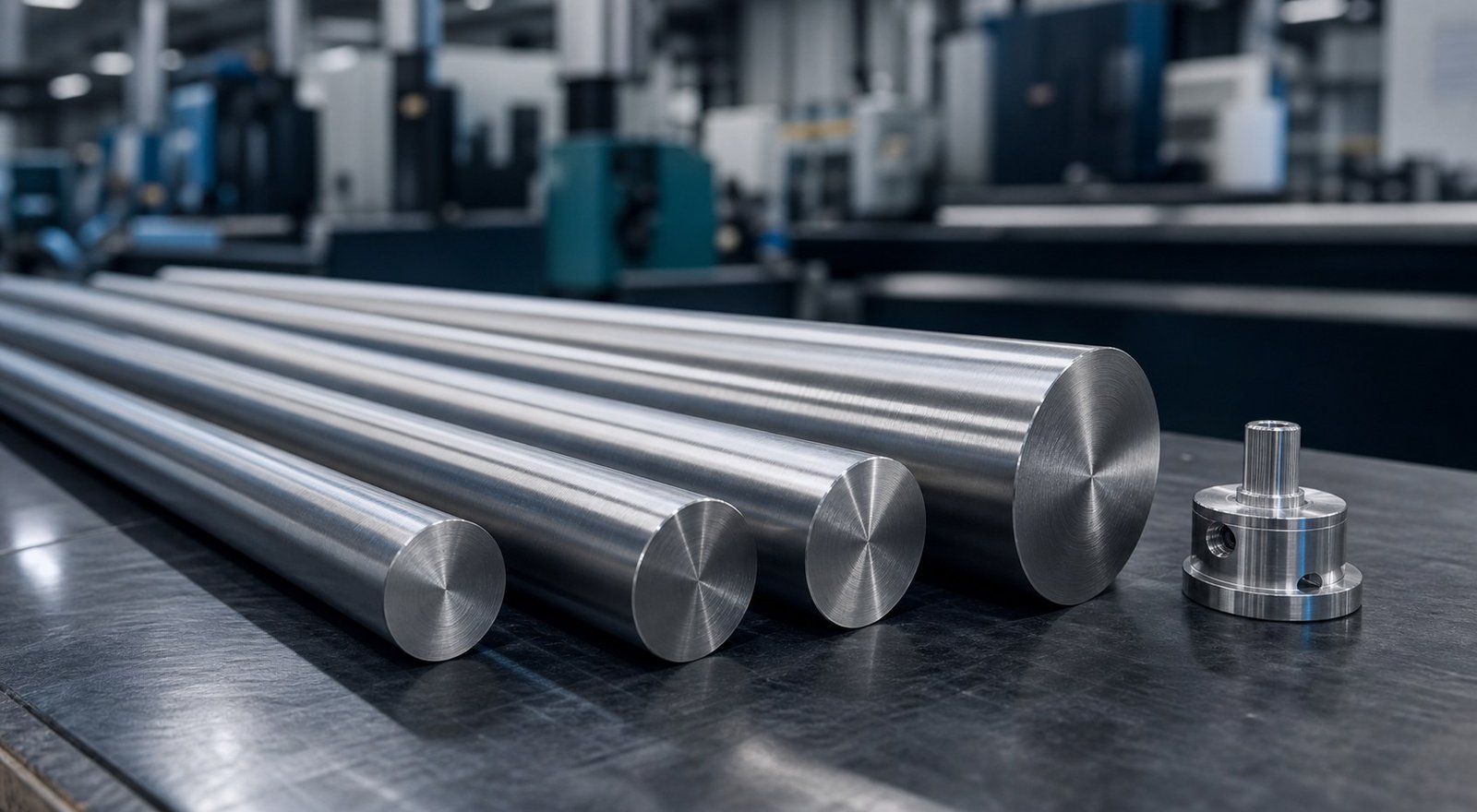
Quick answer: 17-4 PH is the familiar trade name for a precipitation-hardening stainless grade generally identified as UNS S17400 and commonly associated with AISI Type 630. AMS 5643 is an aerospace material specification for particular wrought product forms and requirements. The names are related, but they are not interchangeable purchase specifications.
Why this grade has several names
Material conversations often mix a commercial name, a numbering-system designation and a procurement standard. “17-4 PH” describes the alloy family and its approximate chromium-nickel balance, while “PH” identifies precipitation hardening. UNS S17400 is the Unified Numbering System designation. Type 630 is the established stainless-steel type designation frequently used in industry. AMS 5643, by contrast, is a controlled SAE aerospace material specification, not another grade name.
A quotation that says only “17-4” leaves important questions unanswered. The required product form, specification revision, heat-treatment condition, dimensions, surface condition, mechanical acceptance criteria, inspection and certification all influence whether the delivered material is suitable.
What makes 17-4 PH different
17-4 PH is a martensitic precipitation-hardening stainless steel. It can be solution treated and subsequently aged to develop a useful combination of strength, hardness and corrosion resistance. This processing route lets designers select an aging condition that balances strength, toughness, dimensional stability and environmental performance.
The grade is widely considered when a component needs higher strength than general-purpose austenitic stainless grades can normally provide in their annealed condition. Typical discussions include shafts, valve parts, fasteners, pump components, tooling, aerospace hardware and other precision-machined parts. Actual suitability always depends on the governing design standard, loading, temperature, environment and section size.
AMS 5643: specification rather than nickname
SAE International maintains AMS 5643 for corrosion-resistant precipitation-hardening steel bars, forgings and related wrought forms covered by the current revision. Separate slash specifications may define material supplied in a specified precipitation-hardened condition. For example, SAE lists AMS5643/H1025 for material supplied in the solution- and precipitation-heat-treated H1025 condition.
That distinction matters. Ordering to a general alloy designation does not automatically invoke the sampling, quality, heat-treatment, testing, reporting or dimensional provisions of AMS 5643. Likewise, a certificate mentioning UNS S17400 does not by itself prove compliance with every requirement of an AMS specification.
Understanding heat-treatment conditions
The condition designation communicates a processing history, not merely a target hardness. Condition A generally identifies solution-treated material intended for subsequent aging. Conditions such as H900, H1025, H1075, H1100 and H1150 refer to different precipitation-hardening treatments. Lower aging temperatures generally target higher strength and hardness, while higher aging temperatures are often selected to improve toughness or resistance to certain forms of stress-corrosion cracking.
No condition should be chosen from strength alone. The engineering review should consider toughness, fatigue, corrosion exposure, residual stress, distortion during processing and the properties required through the actual section. If final heat treatment will occur after machining, the drawing and purchase order should define responsibility for heat treatment and final verification.
Designation checklist
| Term | What it tells you | What it does not tell you |
|---|---|---|
| 17-4 PH | Common alloy and precipitation-hardening family name | Exact product specification, revision or delivery condition |
| AISI Type 630 | Common stainless type designation | Complete aerospace procurement requirements |
| UNS S17400 | Unified alloy identification | Product form, dimensions, testing or certification scope |
| AMS 5643 | SAE aerospace material specification for defined wrought products | Automatic approval of an unspecified revision or condition |
Corrosion resistance has limits
17-4 PH contains enough chromium to form a passive surface film, so it can offer useful corrosion resistance in many atmospheric and mildly corrosive environments. It is not immune to chloride attack, crevice corrosion, contamination or stress-corrosion cracking. Surface condition, fabrication practice, aging condition and sustained stress can change performance.
Material selected for seawater, concentrated chloride, strong acid or another aggressive medium requires application-specific corrosion data. A generic statement that 17-4 PH is “corrosion resistant” should never replace a review of chemistry, temperature, exposure time, cleaning and component geometry.
Machining, welding and fabrication
Machining response depends strongly on the supplied condition and required final properties. Stock allowance, tool choice, heat generation and dimensional change during aging should be considered at the planning stage. Welding is possible with qualified procedures, but the thermal cycle can alter local microstructure and properties. The fabrication route should therefore define filler selection when applicable, heat-treatment sequence, cleaning and any required post-weld examination.
For critical aerospace or pressure-related hardware, material substitution, re-aging, repair welding and surface processing should follow approved engineering instructions rather than shop-floor judgment alone.
What to include in a purchase inquiry
State the complete material designation and required specification revision; product form; delivery condition; dimensions and tolerances; quantity; surface finish; ultrasonic, magnetic-particle or other examination requirements; grain-flow or forging requirements when relevant; heat-treatment responsibility; marking; traceability; and certificate type. Optional or supplementary requirements should be written into the order rather than assumed.
The MTC should link the heat number and delivered product to the specified chemistry, heat treatment and mechanical test results. For aerospace work, the applicable quality-system, source approval and documentation requirements may be as important as the alloy itself.
Is 17-4 PH exactly the same as AISI 630?
They usually refer to the same alloy family, but a buyer should not treat a familiar name as a complete specification. Confirm UNS S17400, the applicable product standard, revision, product form and heat-treatment condition on the order.
Does AMS 5643 automatically mean H900?
No. AMS 5643 and its related slash specifications distinguish product and condition requirements. The order must state the required condition and the applicable current or contractually mandated revision.
Conclusion
17-4 PH, AISI 630 and UNS S17400 help identify the alloy, while AMS 5643 controls a procurement route for specified aerospace-quality wrought products. A responsible order connects all four layers: alloy identity, product form, heat-treatment condition and verification requirements. That is the difference between a recognizable grade name and a technically complete material specification.
Technical references
SAE International: AMS 5643 · SAE International: AMS5643/H1025 · NASA Technical Reports Server: 17-4 PH and 15-5 PH
Discuss Your 17-4 PH Requirement with SAKYMETAL
Send SAKYMETAL the required specification, revision, product form, dimensions, condition, inspection scope and documentation requirements for a technically aligned quotation.
Next step: view stainless steel bar products or contact SAKYMETAL.
Technical note: This article is a selection guide, not a substitute for the governing drawing, design code or material specification. Actual chemistry, condition and test results shall be confirmed by the applicable specification and MTC.